21 Moody Farmhouse Kitchen Ideas with Rustic Charm
Dark cabinets, warm wood, and vintage details can make a kitchen feel cozy, timeless, and full of character. The secret is knowing how to balance rich colors with natural textures so the room feels inviting rather than too dark.
These 21 moody farmhouse kitchen ideas with rustic charm will help you create a space that feels both beautifully rustic and practical for everyday living. Whether you’re planning a complete renovation or simply updating a few details, you’ll find inspiration for every budget and kitchen size.
From deep forest green cabinets and antique brass hardware to reclaimed wood shelves and warm pendant lighting, each idea offers a different way to bring farmhouse character into your home. I’ve noticed that small changes, such as switching cabinet handles or adding natural wood accents, can make a kitchen feel more thoughtfully designed without requiring a major makeover.
You’ll also discover practical styling tips to help you choose complementary colors, materials, and finishes. Save your favorite ideas, explore what suits your space, and start creating a kitchen that feels warm, personal, and wonderfully lived-in.
Dark Sage Green Cabinets
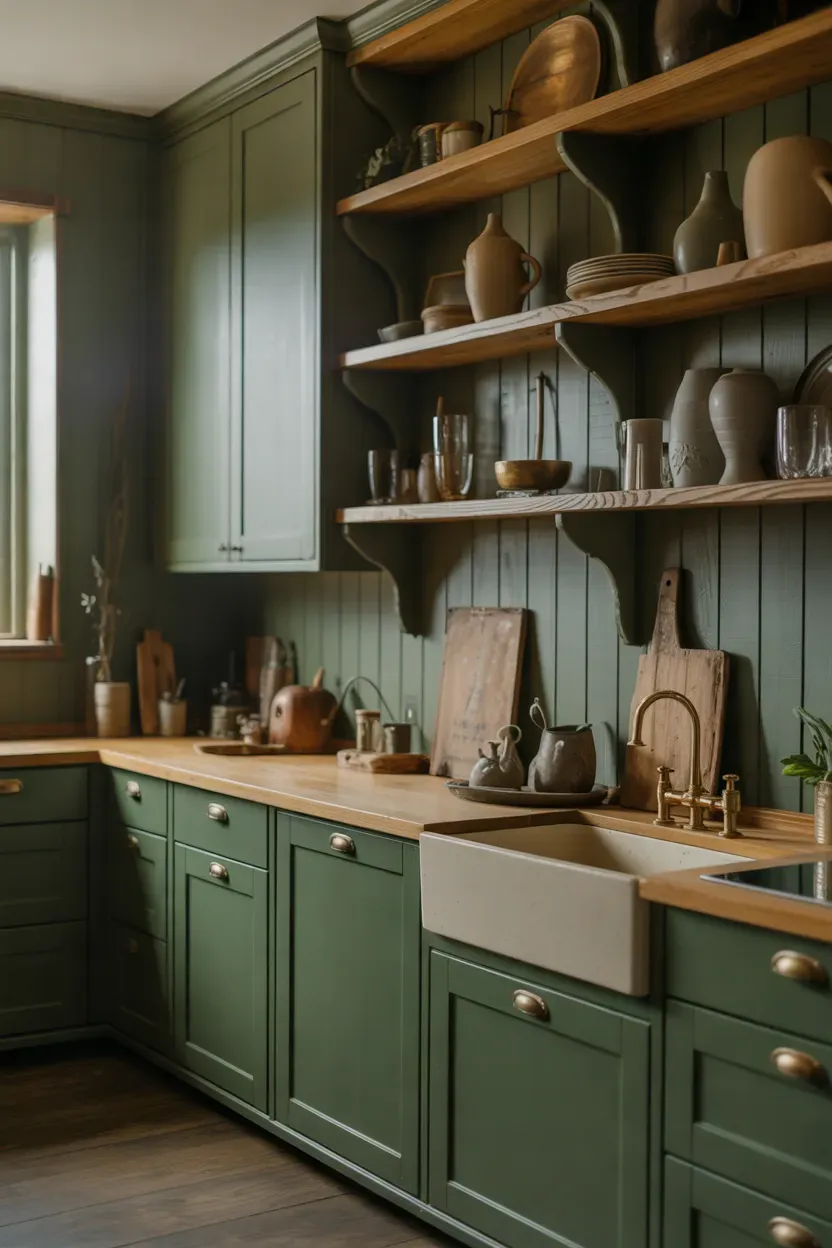
Deep sage cabinetry brings a rich, grounded feeling to a farmhouse kitchen without making the room feel too heavy. Its muted green undertones work beautifully with natural wood, aged brass, and creamy stone surfaces. The result feels rustic, collected, and timeless rather than overly polished.
For a balanced finish, pair the cabinets with light countertops and a warm wood accent or two. In my experience, keeping the larger surfaces relatively light helps darker cabinetry stand out without making a small kitchen feel cramped. Add a linen tea towel or handmade ceramic bowl for a lived-in touch.
Rustic Exposed Wood Beams
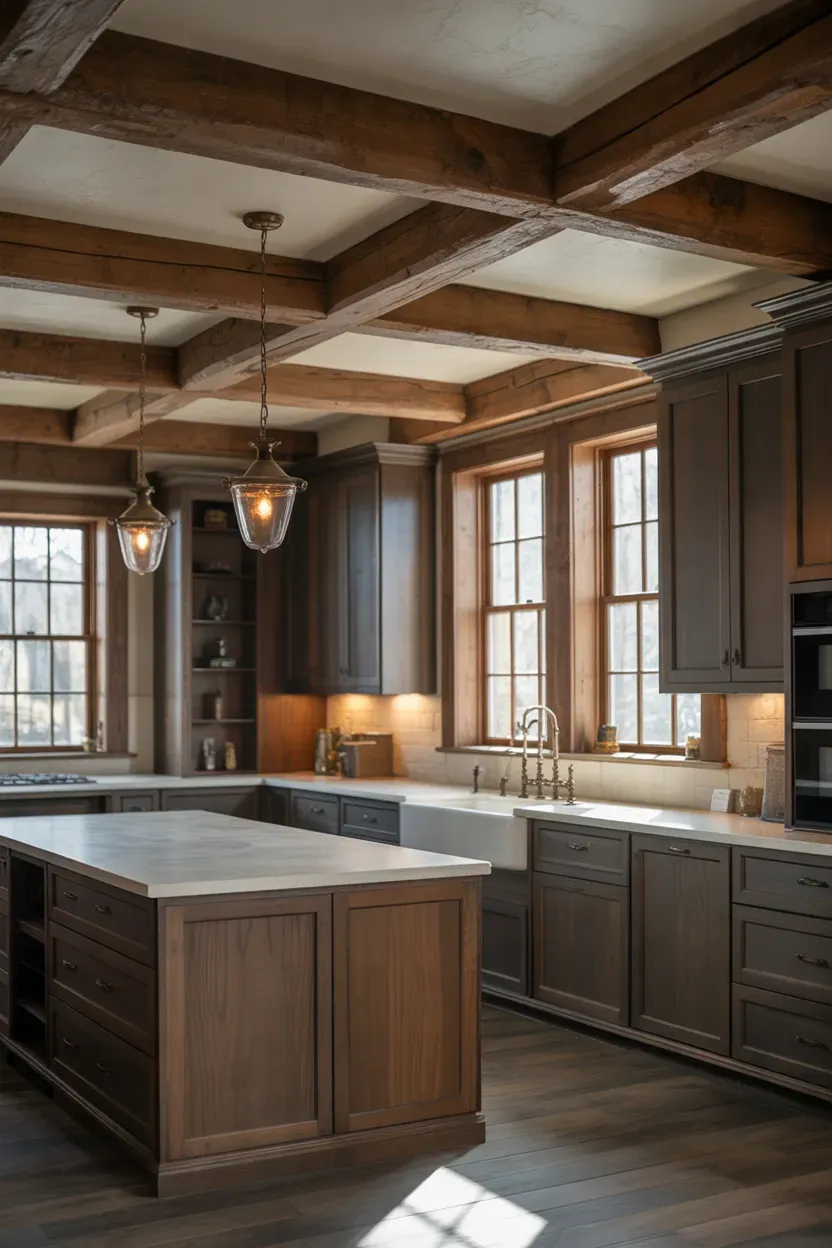
Exposed timber beams give a kitchen instant architectural character, especially when paired with dark cabinetry and traditional farmhouse details. Their natural grain breaks up darker surfaces and draws the eye upward, making the room feel more layered. Reclaimed oak, weathered pine, and walnut each bring a slightly different rustic finish.
- For high ceilings: Choose substantial beams that feel proportional to the room.
- For lower ceilings: Use slimmer beams to avoid making the space feel enclosed.
- For darker kitchens: Pair brown timber with lighter walls or countertops.
- For a cohesive finish: Repeat the wood tone on shelves, stools, or an island.
Natural timber works especially well with matte black fixtures and warm lighting. If structural beams are not practical, decorative faux beams can provide a similar look. Always check the material’s suitability and installation requirements before adding them overhead.
Matte Black Farmhouse Fixtures
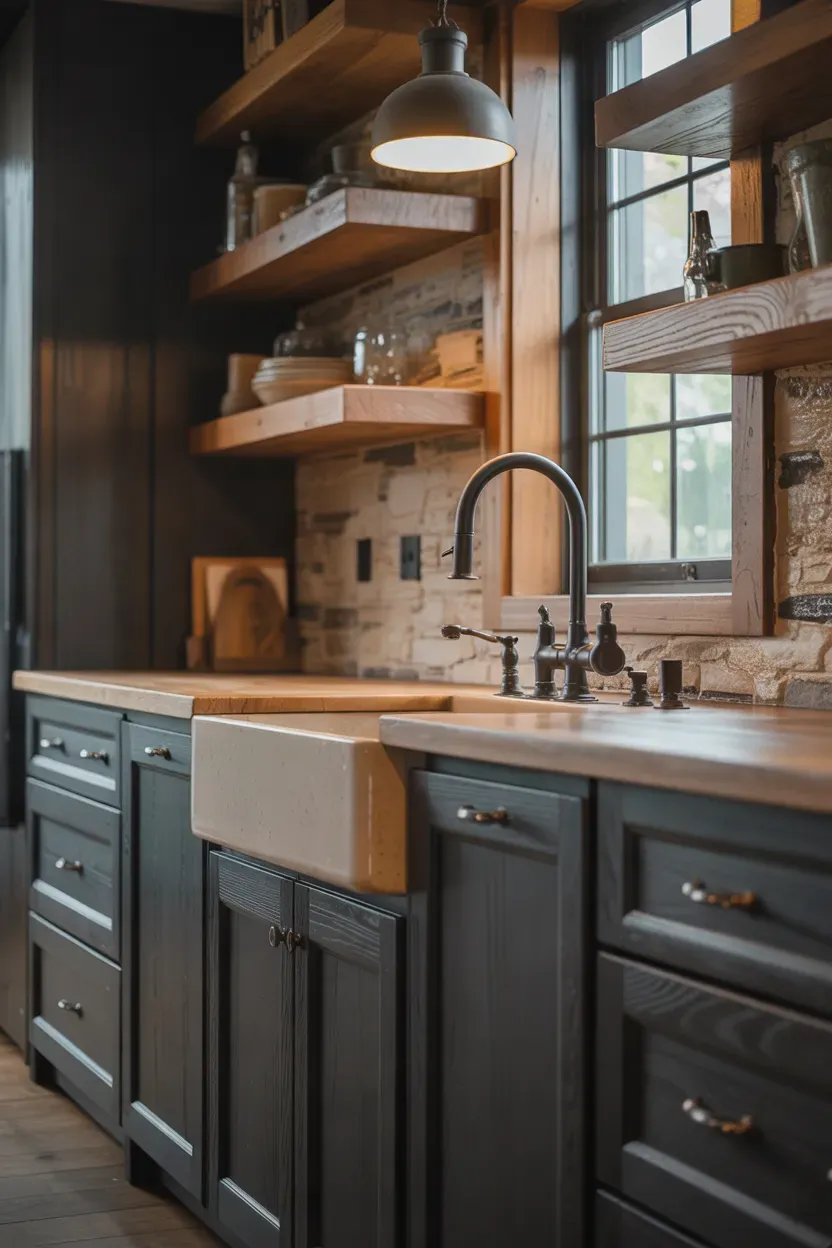
Matte black fixtures add definition to a rustic kitchen, especially when the surrounding palette includes deep greens, charcoal, warm wood, and creamy neutrals. A black faucet or pendant light creates a crisp focal point without competing with the natural textures that make farmhouse interiors feel inviting.
Quick Tip:
Repeat black in two or three places, such as the faucet, cabinet handles, and lighting. This creates a connected look instead of making each fixture feel like a separate choice. Choose finishes with similar undertones for a more consistent result.
For a practical setup, consider how each fixture will be cleaned and maintained. Matte finishes can show water spots or fingerprints depending on their coating, so check the manufacturer’s care instructions before buying. A few well-placed black accents are often enough to give a moody farmhouse kitchen its signature contrast.
Weathered Brick Backsplash
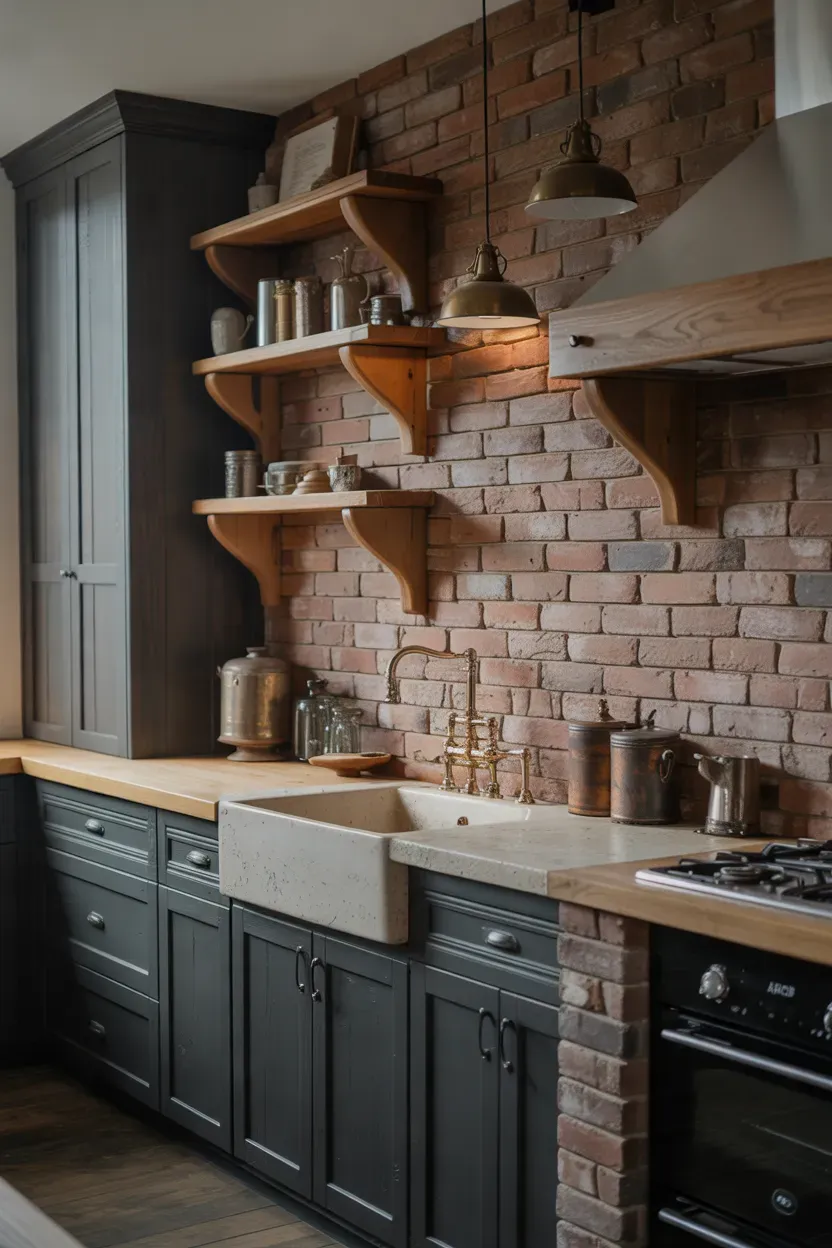
Rough brick brings an old-world character that smooth modern finishes often lack. Its earthy red, brown, and muted gray tones pair beautifully with dark cabinetry, making the kitchen feel grounded and full of texture. Choose reclaimed brick or brick veneer designed for interior use to achieve the look without excessive bulk.
Keep nearby surfaces simple so the backsplash remains the focal point. Wooden shelves, ceramic jars, and understated metal hardware complement the uneven brickwork without making the wall feel crowded. For areas exposed to cooking grease or frequent splashes, check the manufacturer’s sealing and cleaning recommendations before installation.
Antique Brass Cabinet Hardware
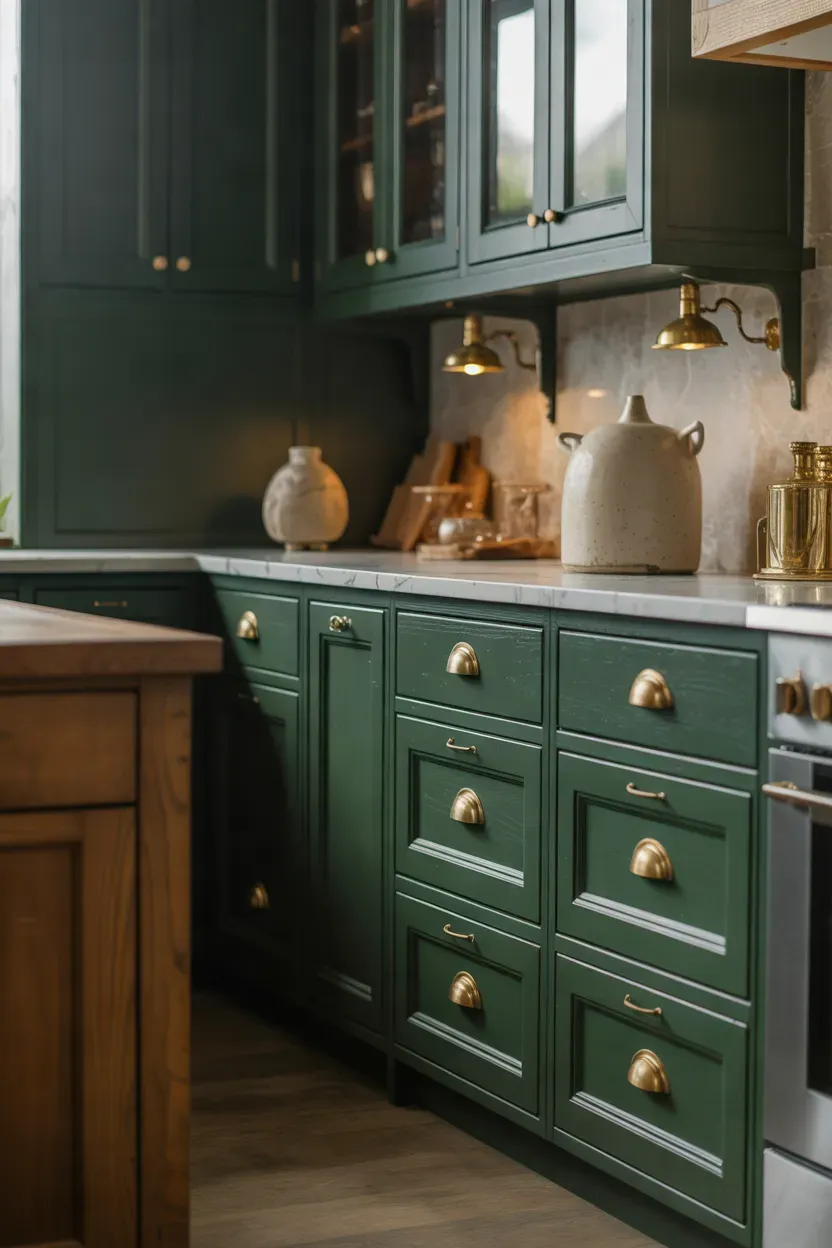
Small hardware changes can give ordinary cabinets a more established, traditional appearance. Antique brass adds a warm golden contrast against forest green, charcoal, and black cabinetry. Cup pulls suit drawers, while simple knobs work well on cabinet doors, creating a classic farmhouse combination without requiring a full kitchen renovation.
- For green cabinets: Choose aged brass for a warm, earthy contrast.
- For charcoal cabinets: Use brushed antique brass to soften the darker finish.
- For wooden cabinets: Select understated brass knobs that let the grain stand out.
- For consistency: Match the visible hardware finishes across the main cabinetry.
Before ordering, measure the existing hole spacing if you’re replacing drawer pulls. Matching those measurements can save you from drilling new holes or repairing old ones. A few coordinated details can make the entire kitchen feel more thoughtfully finished.
Dark Cabinets With Light Stone

The contrast between dark cabinets and pale stone keeps a rustic kitchen dramatic without making every surface feel heavy. Creamy limestone, warm quartz, or softly veined marble-look surfaces reflect available light and balance the deeper cabinetry. This combination also gives wooden accents and vintage accessories room to stand out.
| Design choice | Visual effect |
| Charcoal cabinets | Deep, grounded contrast |
| Creamy stone counters | A brighter work surface |
| Warm oak shelves | Natural rustic texture |
| Brass hardware | Soft golden highlights |
For everyday cooking, prioritize a countertop that suits your cleaning habits and budget. Natural stone and engineered quartz have different maintenance needs, so compare their care requirements before choosing. Keeping the backsplash close to the countertop’s color can also make a compact kitchen feel more open.
Vintage Farmhouse Pendant Lights
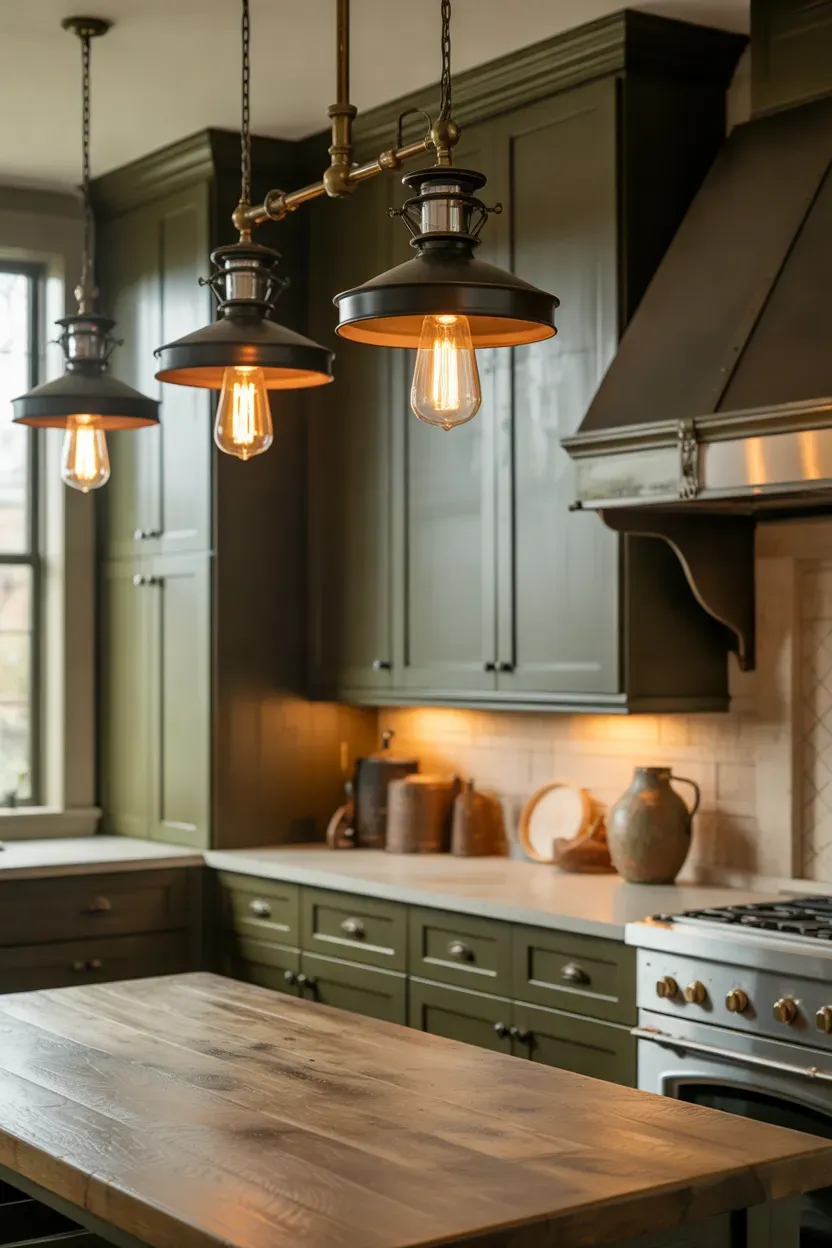
Lighting can change the entire character of a kitchen, and vintage-style pendants bring warmth to darker farmhouse interiors. Black metal shades create a traditional workshop feel, while aged brass and weathered finishes add a softer antique touch. Hanging them above an island also creates a natural focal point.
DO:
- Choose warm-white bulbs around 2700K for a cozy glow.
- Hang pendants in proportion to the island size.
- Repeat the fixture’s metal finish elsewhere in the room.
- Install dimmers when the bulbs and fixtures support them.
DON’T:
- Choose oversized shades that block sightlines.
- Mix too many competing metal finishes.
- Rely on decorative pendants as the only work lighting.
- Ignore the manufacturer’s hanging and clearance requirements.
Layered lighting makes the space more useful throughout the day. Combine pendants with under-cabinet lights and general ceiling lighting so food preparation remains clear while evening meals feel relaxed.
Reclaimed Wood Shelving

Cost: Low to moderate, depending on the wood and installation.
Skill Level: Beginner to intermediate.
Best For: Displaying everyday dishes, jars, and rustic accessories.
Visual Result: An open, layered look that balances darker cabinetry.
Maintenance: Regular dusting and occasional cleaning are needed.
Reclaimed wood shelves introduce natural texture without adding another bulky cabinet. I’ve noticed that a restrained arrangement usually looks more intentional than rows of decorative objects. Keep frequently used plates and glasses within easy reach, then add a few wooden boards or ceramic pieces for warmth. Secure shelves to suitable wall supports and confirm their load capacity before displaying heavy dishes.
Warm Terracotta Accents

Terracotta adds an earthy warmth that helps dark green, charcoal, and brown finishes feel more inviting. Its rusty orange and muted clay tones complement reclaimed timber and aged brass, giving the kitchen a collected farmhouse appearance without requiring permanent changes.
Start with two or three clay accessories, such as a pitcher beside the stove, a planter near the window, or a shallow bowl on an open shelf. Choose matte or lightly textured finishes rather than glossy orange ceramics for a more natural look. If you use terracotta planters for herbs, place a waterproof saucer underneath to protect wooden shelves and stone counters from moisture.
Moody Navy Blue Cabinets

Deep navy cabinets bring a classic, slightly dramatic character to a farmhouse kitchen. Their cool blue undertones contrast beautifully with golden brass, warm oak, and creamy countertops. Unlike brighter blues, a muted navy shade feels grounded and pairs naturally with traditional shaker doors and vintage-inspired accessories.
To keep the room balanced, use lighter finishes on the backsplash and work surfaces. Wooden shelves can soften the contrast, while warm pendant lighting prevents the blue from feeling too cold in the evening. Before painting existing cabinets, test a sample in morning and evening light because navy shades can appear almost black in darker corners.
Farmhouse Apron Front Sink

A deep apron-front sink gives the kitchen a traditional focal point while providing generous space for washing large pots, baking trays, and everyday dishes. White fireclay creates a striking contrast against dark cabinets, while stainless steel offers a more understated, practical alternative.
- Measure the cabinet opening: Confirm compatibility before choosing a sink.
- Check the countertop cutout: Apron-front models may require specialized installation.
- Plan faucet placement: Leave enough room for handles and everyday cleaning.
- Consider daily maintenance: Check the manufacturer’s guidance for stains, scratches, and cleaning products.
A farmhouse sink works especially well beneath a window or beside open wooden shelving. Remember that some models are heavy when filled with water, so proper cabinet support and professional installation may be necessary. Choose a size that suits your kitchen workflow rather than sacrificing useful counter space for appearance alone.
Natural Stone Backsplash
BEFORE
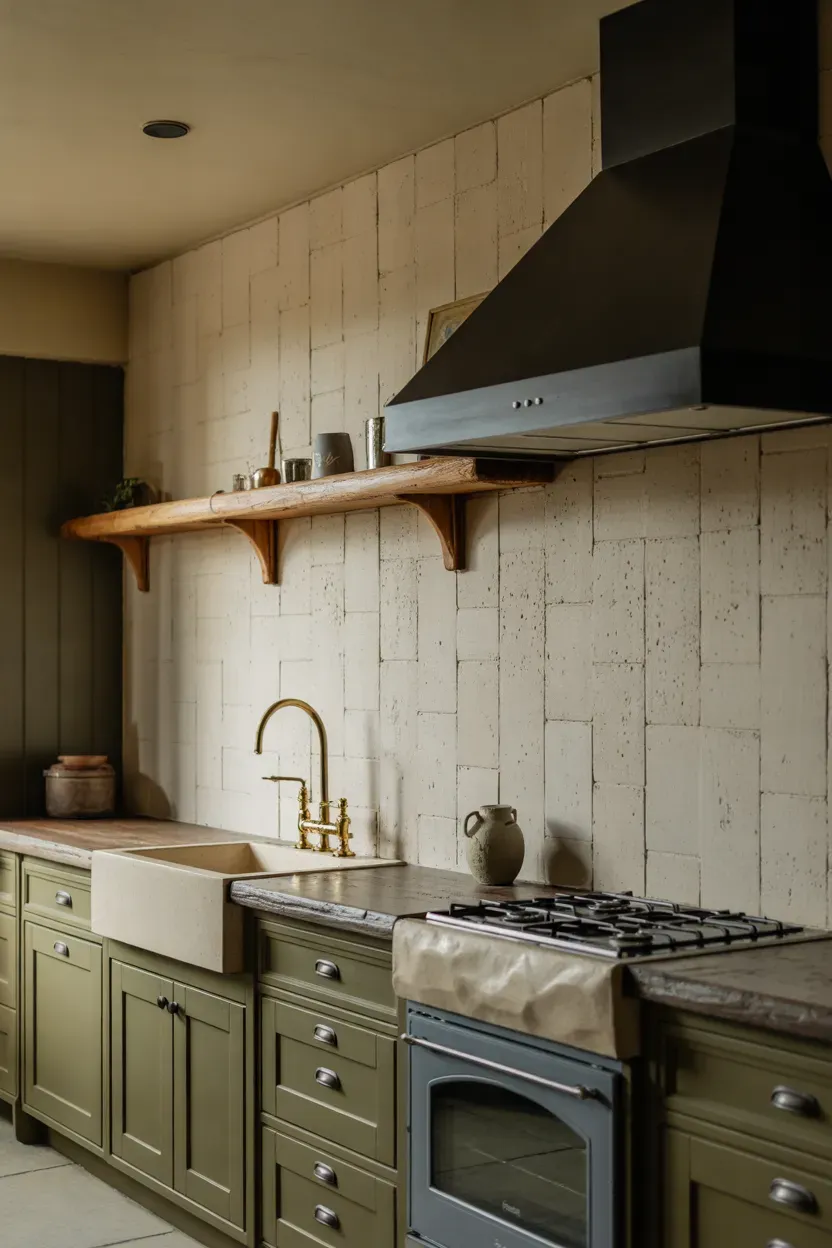
A kitchen with plain, flat backsplash tiles can feel visually disconnected from rustic cabinetry and wood accents. The surfaces may be easy to clean, but the room lacks the natural variation that gives farmhouse interiors their character.
AFTER
A natural stone backsplash introduces subtle veining, earthy color shifts, and tactile depth. Paired with dark cabinets and warm timber, it creates a more layered look without relying on extra decorations.
Natural stone varies in porosity and maintenance needs, so choose the material according to the area where it will be installed. Seal it when recommended by the manufacturer, particularly near cooking and sink zones. For a lower-maintenance alternative, consider a stone-look porcelain tile with realistic texture and a complementary warm undertone.
Rustic Wooden Kitchen Island
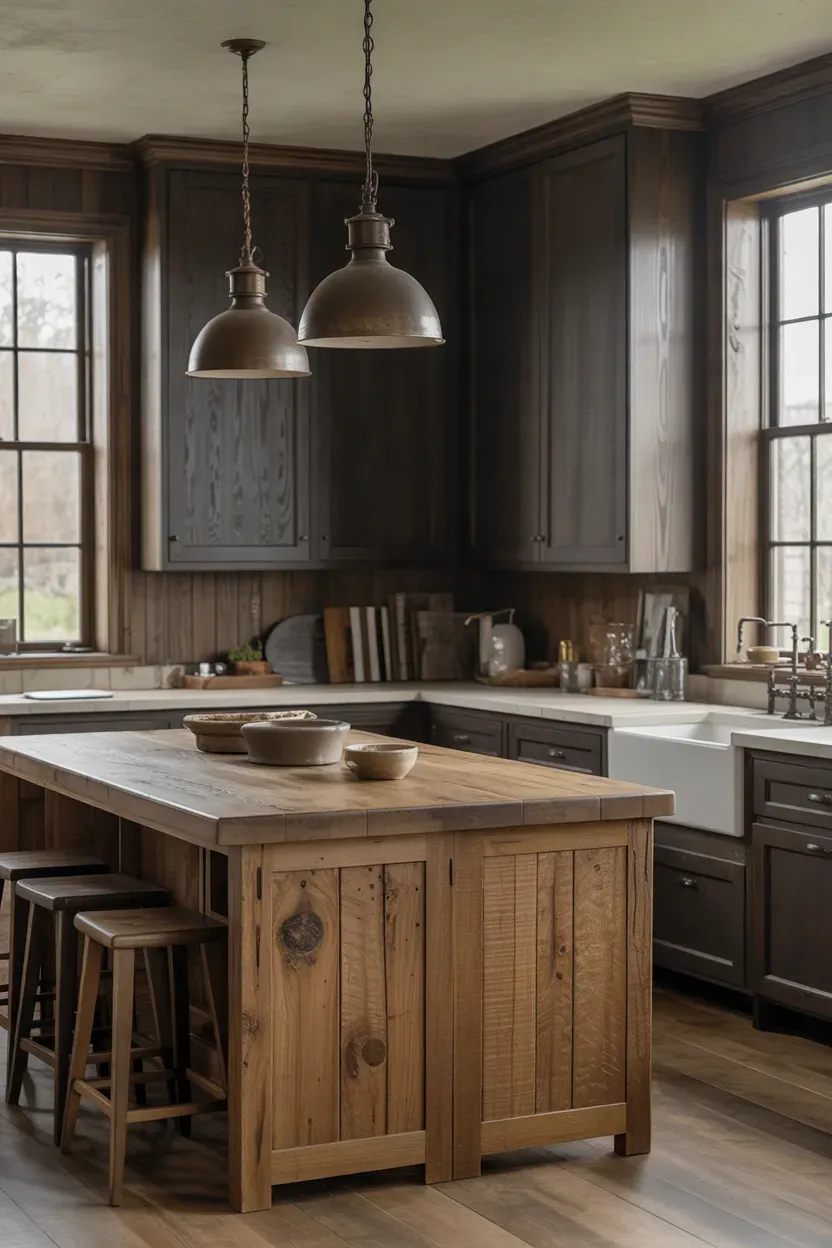
A substantial wooden island gives a dark farmhouse kitchen a natural centerpiece. Reclaimed oak, walnut, and weathered pine introduce grain patterns and warm brown tones that soften charcoal or forest green cabinetry. The contrast also makes the island feel like a piece of furniture rather than another row of kitchen cabinets.
- Choose the wood tone: Match the island to existing floors or shelving without making every wood surface identical.
- Plan the worktop: Select a durable surface suited to food preparation and daily cleaning.
- Add practical storage: Include drawers or open shelves for cookware and serving pieces.
- Leave enough clearance: Maintain comfortable walking space around the island and nearby appliances.
A freestanding antique-style table can offer a similar look in a smaller kitchen. Before choosing a fixed island, check the available floor space and appliance clearances. The most successful design combines rustic character with enough room to cook, move, and gather comfortably.
Also View: 25 Small Apartment Balcony Ideas for a Cozy Escape
Vintage Checkerboard Flooring
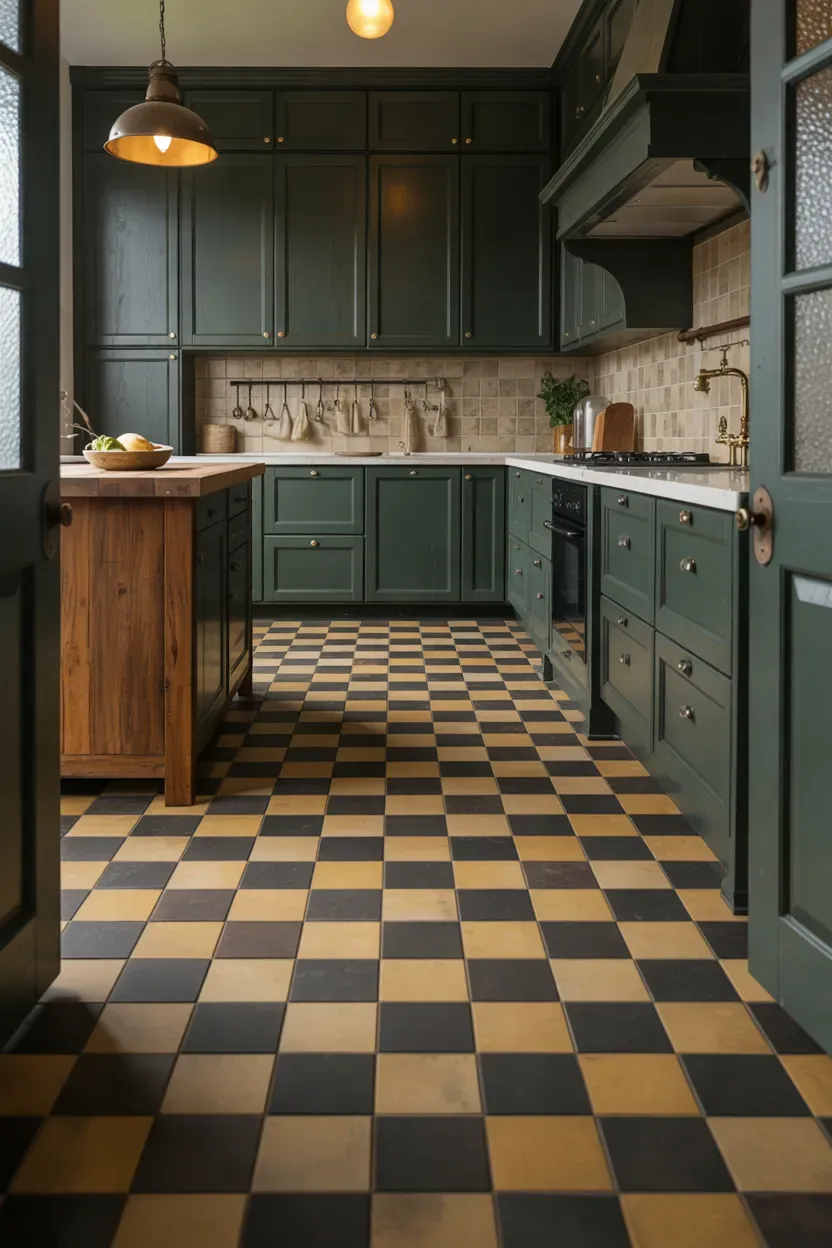
Checkerboard flooring adds pattern and old-world character beneath dark cabinets. A charcoal and cream combination feels traditional without looking overly bright, while larger squares create a calmer effect than tiny, busy patterns. The repeating geometry also provides contrast against the organic grain of wood and the uneven texture of handmade ceramics.
| Flooring choice | Best visual effect |
| Charcoal and cream | Classic farmhouse contrast |
| Brown and beige | Softer, earthy warmth |
| Large squares | Cleaner, less busy appearance |
| Small squares | Vintage, detailed character |
For a kitchen that sees heavy daily use, choose flooring rated for the intended application and consider slip resistance, cleaning needs, and grout maintenance. Sample the tiles beside your cabinets before committing. Dark grout can make maintenance easier to manage visually, but the final choice should complement the overall palette.
Antique Furniture Accents

DO:
- Add a vintage stool beside a counter or island.
- Use an old wooden hutch to display dishes when space allows.
- Mix aged timber with dark painted cabinets.
- Check antique furniture for stability before daily use.
DON’T:
- Fill every corner with decorative furniture.
- Block walkways or appliance doors.
- Place unstable pieces near heavy cookware.
- Use untreated furniture where moisture can cause damage.
Antique accents give a farmhouse kitchen a sense of history without requiring every finish to look aged. A single worn hutch or wooden stool can add more character than several matching accessories. Keep the surrounding surfaces relatively simple so the furniture remains a meaningful focal point rather than creating visual clutter.
Open Shelves With Pottery

Handmade pottery brings an earthy, collected look to open shelving, especially against dark cabinets and natural timber. Cream bowls brighten the arrangement, while brown stoneware and muted gray ceramics add depth. The mix feels more authentic when the pieces vary slightly in shape, size, and finish rather than matching perfectly.
Cost: Low to moderate, depending on the pottery collection.
Time: About 30 to 60 minutes for styling.
Skill Level: Beginner.
Best For: Open shelves, breakfast stations, and kitchen alcoves.
Maintenance: Regular dusting and occasional washing.
Start with everyday dishes you already own, then add two or three decorative pieces to fill gaps. Keep heavier pottery on securely installed shelves and frequently used items within easy reach. Leave some open space between groups so the arrangement looks relaxed rather than crowded.
Charcoal Range Hood
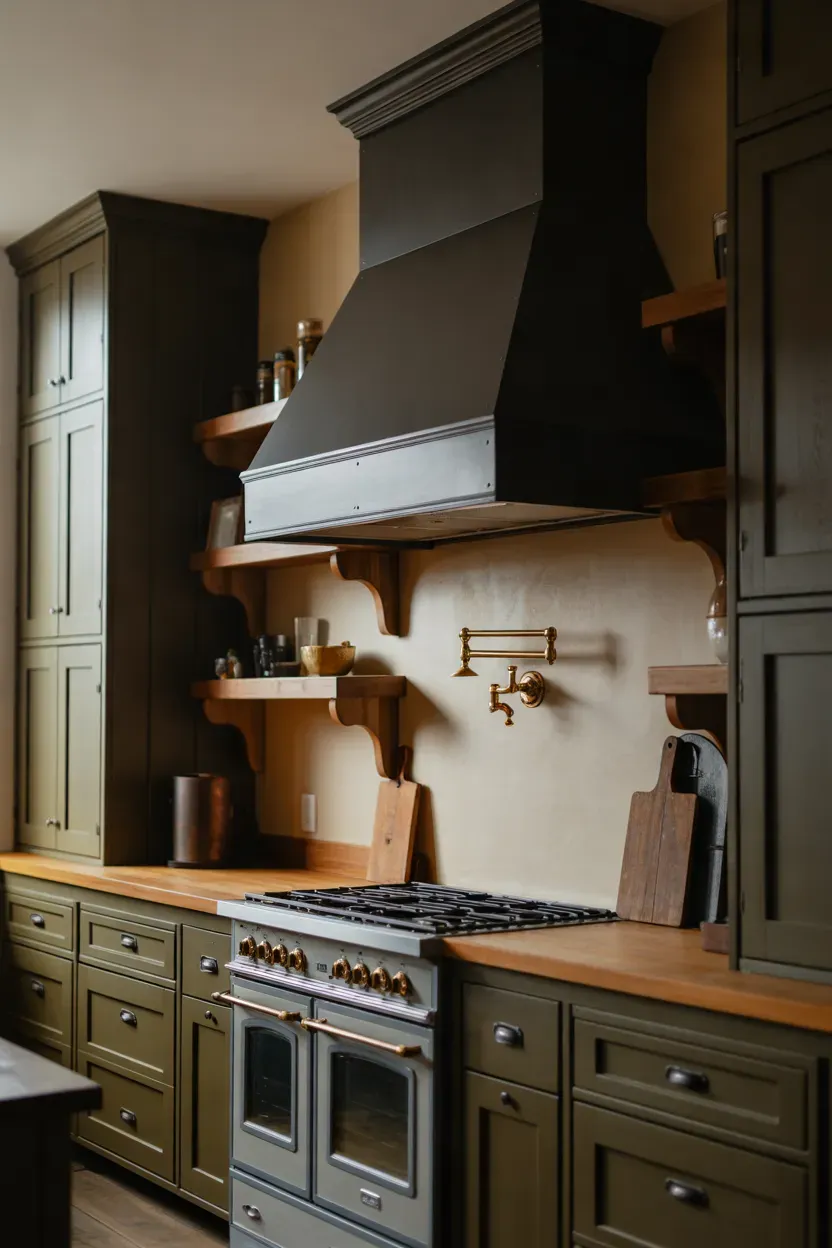
A charcoal range hood gives the cooking area a strong architectural focal point. Its dark finish anchors the wall and works particularly well with olive cabinets, pale stone, and reclaimed wood. A plaster-style hood creates a softer, traditional appearance, while a metal design adds a practical industrial edge.
- Choose the silhouette: Consider a tapered farmhouse shape or a simple squared design.
- Coordinate the finish: Match the hood to the cabinetry or repeat its charcoal tone in nearby fixtures.
- Balance the wall: Use restrained shelving or a simple backsplash to avoid visual clutter.
- Plan ventilation: Select a properly sized hood based on your cooktop and local installation requirements.
Appearance matters, but extraction performance matters just as much. Check the manufacturer’s guidance for airflow, ducting, clearance, and installation. A well-proportioned hood paired with effective ventilation creates a kitchen that feels considered and functions properly during everyday cooking.
Layered Warm Kitchen Lighting
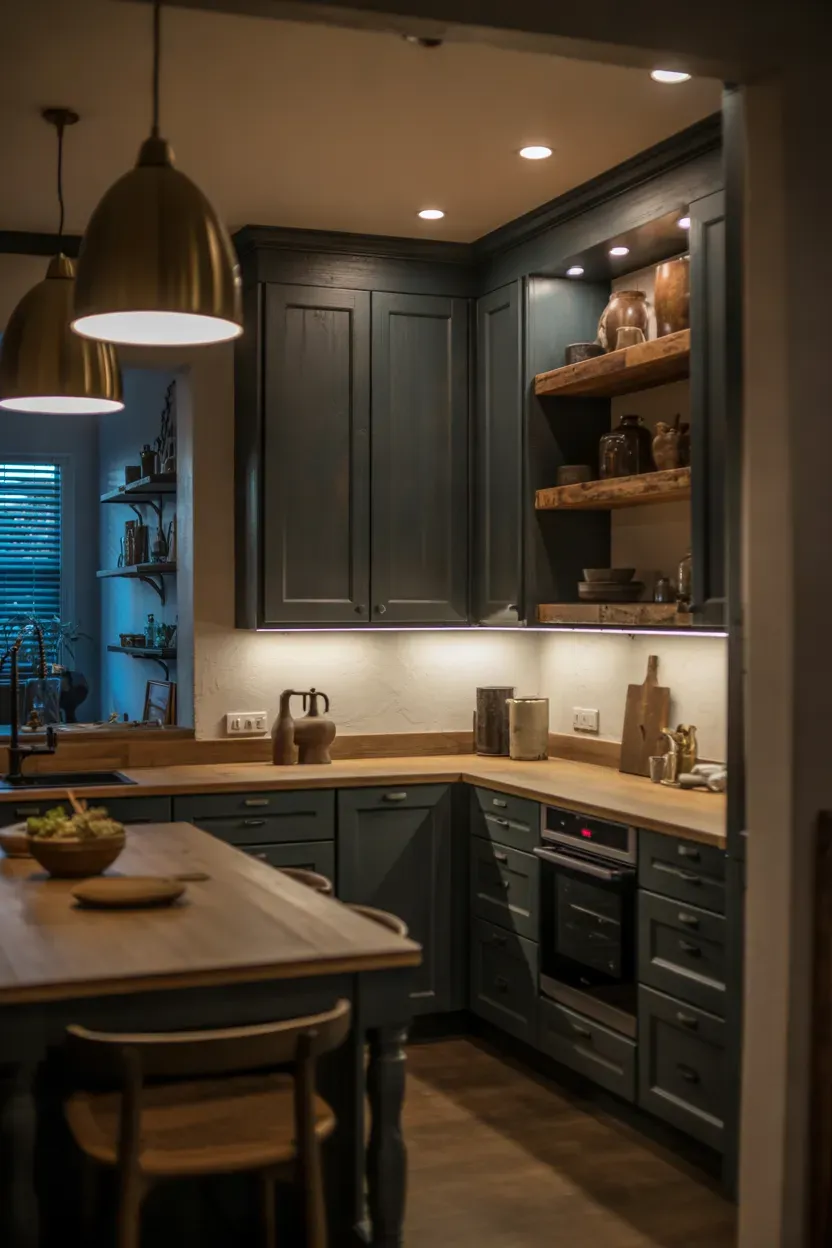
Old Way: Relying on one bright ceiling light can leave dark corners, create harsh shadows on worktops, and flatten the textures of wood and stone.
Better Way: Combine general ceiling lighting with pendant lights over the island and focused task lighting beneath cabinets. Separate controls let you brighten food preparation areas while keeping the rest of the room softer.
Warm lighting helps dark cabinetry feel inviting, but the work surfaces still need clear visibility. Choose bulbs with good color rendering so ingredients and finishes look natural. Dimmers are useful where compatible, allowing the same kitchen to support busy mornings, relaxed dinners, and evening gatherings without changing the decor.
Deep Forest Green Walls
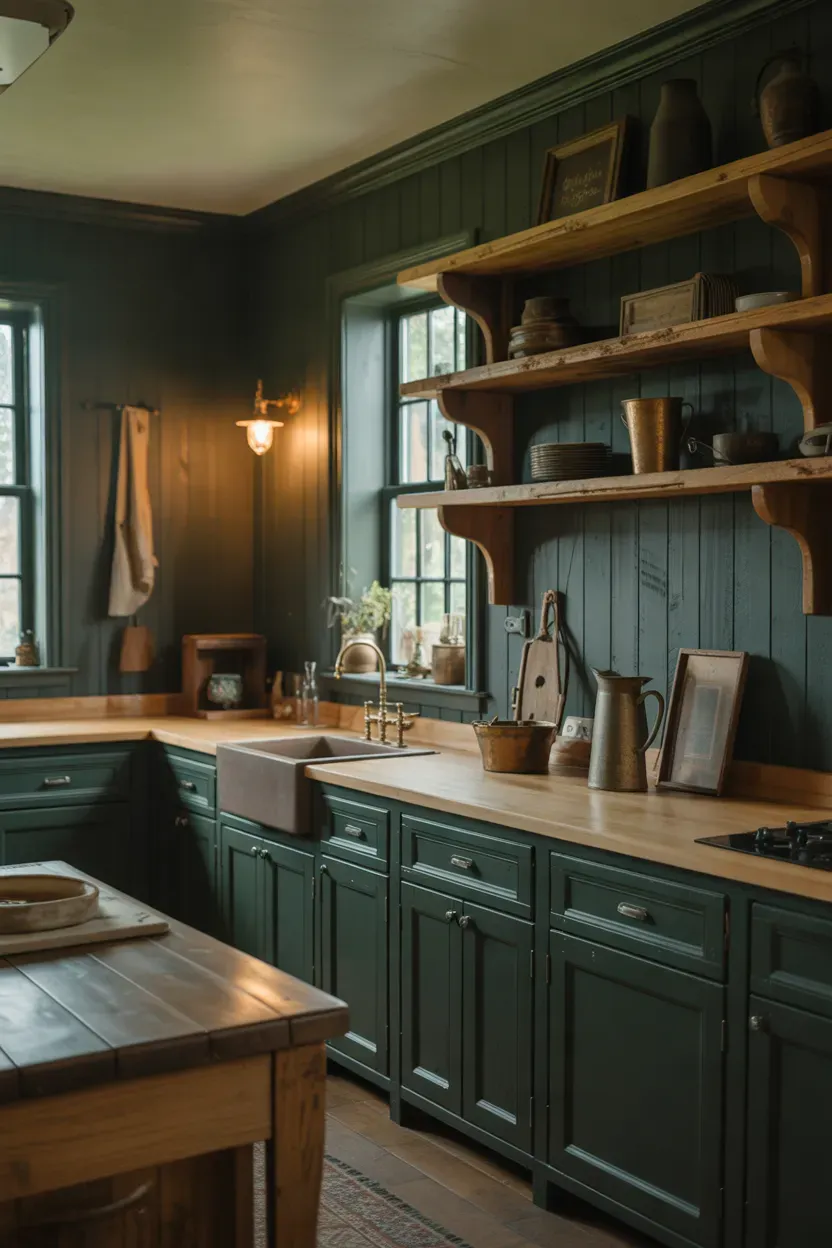
Deep forest green walls create a rich backdrop for natural wood, vintage brass, and traditional farmhouse furniture. The color feels grounded and works particularly well when the kitchen already includes earthy materials. Pairing green walls with cream countertops or a pale backsplash prevents the darker palette from overwhelming the room.
- For a small kitchen: Paint one feature wall and keep the remaining surfaces lighter.
- For a spacious kitchen: Carry the color across several walls for a more enveloping effect.
- For wooden accents: Choose warm oak or walnut to complement the green undertones.
- For a cohesive finish: Repeat green in a small accessory or fabric detail.
Before painting, test sample patches on different walls and observe them throughout the day. North-facing rooms may make some greens appear cooler, while warm artificial lighting can shift their appearance. Choose a washable paint finish suited to kitchen conditions, particularly around areas exposed to moisture and cooking splashes.
Rustic Farmhouse Breakfast Nook

A breakfast nook adds a comfortable place for morning coffee, quick meals, and casual conversations without requiring a separate dining room. A wooden table, cushioned bench, and warm pendant light create a welcoming corner that complements darker farmhouse cabinetry and rustic finishes.
- Find the right corner: Use a window alcove or an unused kitchen wall.
- Choose compact furniture: A round table can improve movement in tighter spaces.
- Add washable cushions: Linen-look performance fabrics are practical for everyday meals.
- Layer natural textures: Include woven placemats, wooden serving boards, and simple pottery.
Keep enough clearance around the table for chairs, drawers, and nearby appliances to open comfortably. A built-in bench can make efficient use of an awkward corner, while a small freestanding table gives you more flexibility. Choose finishes that can handle crumbs, spills, and regular cleaning.
Antique Copper Kitchen Accents

Antique copper accents introduce a warm, burnished glow that contrasts beautifully with dark cabinetry and weathered timber. Copper pots, small canisters, and vintage-style serving pieces bring a traditional farmhouse character to the kitchen without requiring permanent changes. Their reddish tones also complement terracotta pottery and warm oak.
| Styling choice | Best placement |
| Copper cookware | Hanging rail near the cooking zone |
| Small copper canisters | Open shelf or coffee station |
| Copper serving bowls | Island or dining nook |
| Patinated copper pieces | Against dark or neutral backgrounds |
Start with one or two copper pieces and let their finish stand out against simpler materials. Copper develops a natural patina over time, while polished finishes need more upkeep to maintain their shine. If you display cookware, ensure the hanging rail is securely installed and keep heavy pieces away from busy walkways.
Conclusion
A beautiful farmhouse kitchen doesn’t need a complete renovation or an expensive collection of new finishes. Sometimes, dark green cabinets, reclaimed wood shelves, antique brass hardware, or warm lighting are enough to create the cozy atmosphere you’ve been craving.
These 21 moody farmhouse kitchen ideas offer inspiration for different styles, budgets, and spaces, helping you find details that suit your home and everyday routine. Start with one change, build around the materials you already love, and let your kitchen develop its own character.
Save this article on Pinterest for your next decorating project, try your favorite ideas, and share it with someone who loves rustic home decor. Your dream kitchen can begin with one thoughtful detail.